


All about Alicante, general & practical information
Alicante (in Spanish), Alacant (in Valencian) is the largest city on the Costa Blanca in Spain.
It is the capital of the province of Alicante and the second largest city in the autonomous region of Valencia.
Alicante is located fairly centrally on the Costa Blanca; the places above Alicante are often referred to as Costa Blanca North, and all the places below Alicante are referred to as Costa Blanca South.

👥 333,000 inhabitants
📐 area 200km²
📍 166km from Valencia
Ana Poquet (Alicante Tourism Councillor): “Our plan for Alicante rests on the pillars of sustainability, innovation and accessibility to promote the city as a quality destination. We aim to provide the best value for all travelers so that they can experience our city as a local resident.”
Brief summary
All essential information about Alicante: facts & figures, history, location, neighborhoods, weather, gastronomy, all facilities and practical tips for your stay.
Page layout:
- Introduction & history
- Economy & tourism
- Geography & neighborhoods
- Climate & nature
- Transportation & lodging
- Gastronomy
- Facilities
- My experience


Author: Rick, more than 10 years active on the Costa Blanca. These texts are written from my own experiences and based on current sources.
Page updated on: 28 April 2026
Table of contents
ToggleGetting to know Alicante & its history
Did you know that…
- the Romans gave Alicante the name Lucentum, also known in English as the ‘city of light‘;
- Alicante is known for its many rice recipes and that Alicante produces over a ton of rice annually;
- Alicante Airport attracts 9 million visitors annually;
- the entire population of Alicante consists of 15% foreigners;
- the Explanada de España promenade in Alicante contains 400 palm trees and 6.6 million black, red, and cream-colored marbles;
- the castle of Santa Barbara is one of Alicante’s most popular sights and is located 166 meters above the coast.
The history in brief
-
Prehistory and antiquity: the first inhabitants settled in this area as early as prehistory. The Romans founded the city in 218 BC under the name Lucentum;
-
Middle Ages: successively the Visigoths and the Moors ruled the city. After its conquest by the Christian kings, Alicante remained an important commercial city and a strategic point against attacks;
-
19th century: the city underwent major reconstruction and expanded significantly. During this period, Alicante developed into a crucial port city and an emerging destination for tourists;
-
Modern times: during the Spanish Civil War, the city served as an important base for international brigades. From the second half of the 20th century, Alicante grew into the popular vacation destination it is today.
The name ‘Alicante’
The origin of the name Alicante is not entirely certain, but there are several theories about it. One of the most common theories is that it comes from the Arabic word Al-Laqant, which means ‘the source’ or ‘the connection’, and refers to the river Alacant that flows through the city.
Another theory is that the name comes from the Greek word ‘Akra Leuka’, which means ‘white cape’, because of the white rock formations near the coast.

The economy & tourism in Alicante
Local employment
Alicante is not entirely dependent on vacationers. The city is home to important institutions such as the European Union Intellectual Property Office(EUIPO). In addition, the port is a crucial point for exporting goods from the region.
These sectors provide a stable economic base independent of the vacation season. The presence of the university contributes to a constant flow of students and professionals, strengthening local commerce and services.
The development of the tourism industry
The city government is committed to modernizing facilities to keep the city attractive year-round. Ana Poquet, Tourism Alderman, emphasizes the city’s strategic direction:
“Our plan rests on three pillars: sustainability, innovation and accessibility. We aim to provide the best value for all travelers so they can experience Alicante as a local resident.”
The focus is currently on installing digital information points and expanding the cruise terminal to facilitate the influx of visitors. The municipality is also investing in local gastronomy and improved accessibility to the historic center.
Through these measures, the city is seeking growth that respects local culture. Poquet argues that the city’s identity is central to this:
“We are Mediterranean in essence; we love being outside and meeting people.”
The geography & neighborhoods in Alicante
The location of Alicante
Alicante is located on the east coast of Spain. The city lies directly on the Mediterranean Sea among different types of landscapes and it forms the central point of the Costa Blanca. The built-up area is concentrated around a central rock.
-
Region: the city is the capital of Alicante province of the same name;
-
Setting: Alicante is located between the mountainous coast in the north and the sandy plains in the south;
-
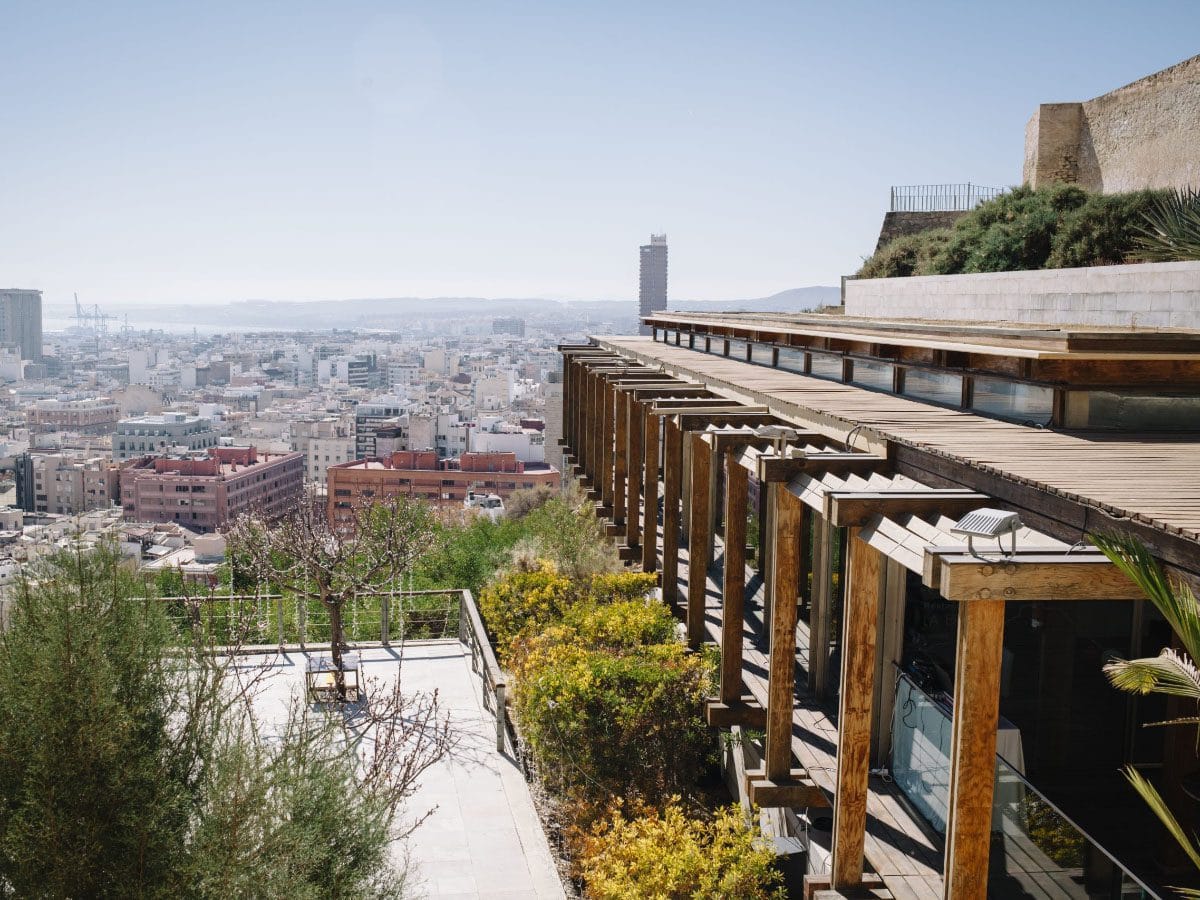
Feature: the Monte Benacantil, a rock 169 meters high;
-
Monument: the Castle of Santa Bárbara, which is located on this rock.

Getting to Alicante
Alicante serves as an important hub for the region, connecting various coastal towns and landscapes. Its location near the international airport makes the city very accessible to travelers. Moreover, well-known places such as Elche and Villajoyosa are within a short travel distance, making the city an ideal base.
The city’s coastline offers direct access to the famous city beach Playa del Postiguet. You will also find the modern marina and the extensive promenade for waterfront relaxation. The combination of these facilities makes the city both a logistics center and a popular destination on the Mediterranean.
Map Alicante Spain
The neighborhoods in Alicante
- El Barrio: this is the historic center of Alicante with narrow streets and old buildings;
- Ensanche-Diputación: this is Alicante’s business center with modern buildings, stores and restaurants;
- San Blas: located northeast of downtown, this neighborhood is primarily a residential area with many apartment complexes;
- Playa de San Juan: This is a popular beach district in the north of Alicante with many hotels and apartments;
- El Cabo: This is a neighborhood east of downtown with a harbor and many seafood restaurants;
- Albufereta: Located north of the center, this neighborhood has a small beach and many restaurants;
- Campoamor: this is a neighborhood south of the center and is mainly a residential area with many villas and gardens;
- Los Ángeles: located west of the center, this neighborhood is mostly residential with many apartment complexes;
- Benalúa: this is a neighborhood southwest of the center and has a large market and many stores;
- Vistahermosa: this is a neighborhood west of downtown and is mainly a residential area with many villas and gardens.
The climate & nature in Alicante
A Mediterranean climate
Alicante welcomes you with a Mediterranean climate that is pleasant all year round. With more than 300 sunny days a year and an average temperature of 20°C, Alicante is a wonderful city for people who love the sun and outdoor activities.
The summers are hot and dry, perfect for swimming and relaxing on the beach. In the winter, you can enjoy mild temperatures and pleasant walks along the promenade (Explanada de España).
Weather, average temperatures
Below is a table showing the average temperatures in Alicante per month:
| Month | Avg. daytime temperature (°C) | Avg. temperature at night (°C) | Avg. number of rainy days |
|---|---|---|---|
| January | 16 | 8 | 5 |
| February | 17 | 9 | 5 |
| March | 19 | 11 | 4 |
| April | 21 | 13 | 3 |
| May | 24 | 16 | 2 |
| June | 28 | 19 | 1 |
| July | 31 | 22 | 1 |
| August | 31 | 22 | 1 |
| September | 28 | 20 | 2 |
| October | 24 | 16 | 3 |
| November | 20 | 12 | 4 |
| December | 17 | 9 | 5 |
The nature around Alicante
The area around Alicante has mountains, coast and green plains:
-
Serra Grossanature reserve: this mountain area is located north of the city. Here you have views of Alicante and the coastline. Hike to the top or explore the trails past caves and historical remains;
-
El HondoNature Park: this wetland is a 40-minute drive south of the city. Many water birds such as flamingos and herons nest here. You hike along paths made of wooden decking;
-
Sierra HeladaNatural Park: this mountain range is located on the coast 40 minutes drive from Alicante. In this nature reserve you will find cliffs and coves on the Mediterranean Sea. Follow the yellow route to the Albir lighthouse or choose the red route for a walk along the cliffs.
The coastal line of Alicante
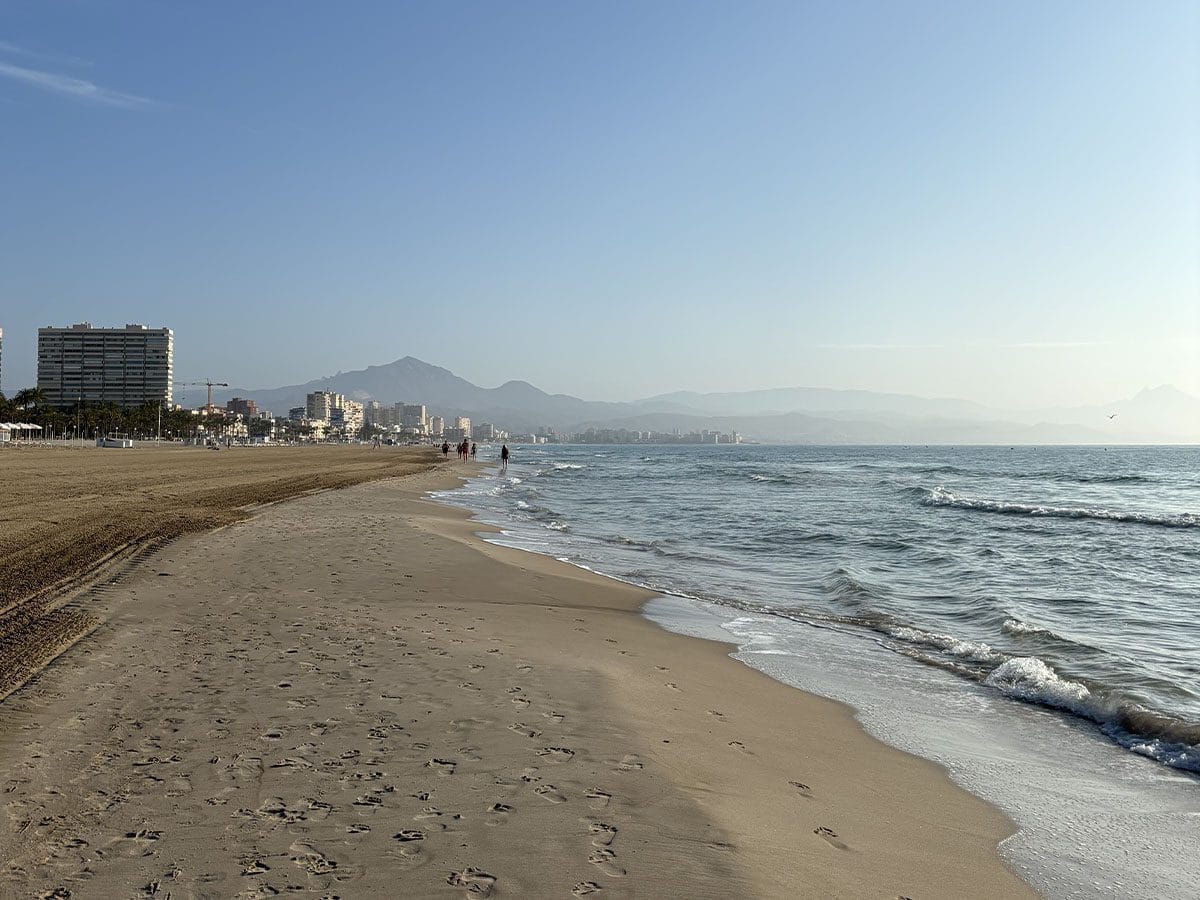
Alicante lies in an impressive, wide bay at the foot of Santa Bárbara Castle Hill.
The coastline stretches south toward the salt flats of Santa Pola and runs north into vast sandy plains and rocky capes.
Transportation & your stay in Alicante
By plane to Alicante
Do you want to go on holiday to Alicante? The city has its own international airport, Alicante-Elche Miguel Hernández (ALC), which makes the journey very easy. From the airport you can reach the heart of the city by car, taxi or bus within 15 to 20 minutes.
From the Netherlands and Belgium, companies such as Transavia, KLM, Vueling, Ryanair and TUI fly fly directly to Alicante, making the destination easily accessible.
On holiday to Alicante
Alicante is a bustling provincial capital that combines the best of both worlds: a dynamic city life and a relaxing beach holiday. The city is an ideal destination for:
- City trips: with the Castillo de Santa Bárbara, the historic Barrio Santa Cruz district, several museums and a lively center, Alicante is perfect for a cultural city trip;
- Beach vacations: from the centrally located city beach Playa del Postiguet to the vast sandy beach of San Juan, the city offers plenty of choice for sun and sea lovers;
- Starting point for the Costa Blanca: thanks to its excellent connections by train and bus, the city is the ideal starting point to explore the rest of the region, from Elche to Villajoyosa.
You can opt for a package tour from a tour operator or arrange your flight and accommodation separately.
Holiday stay in Alicante
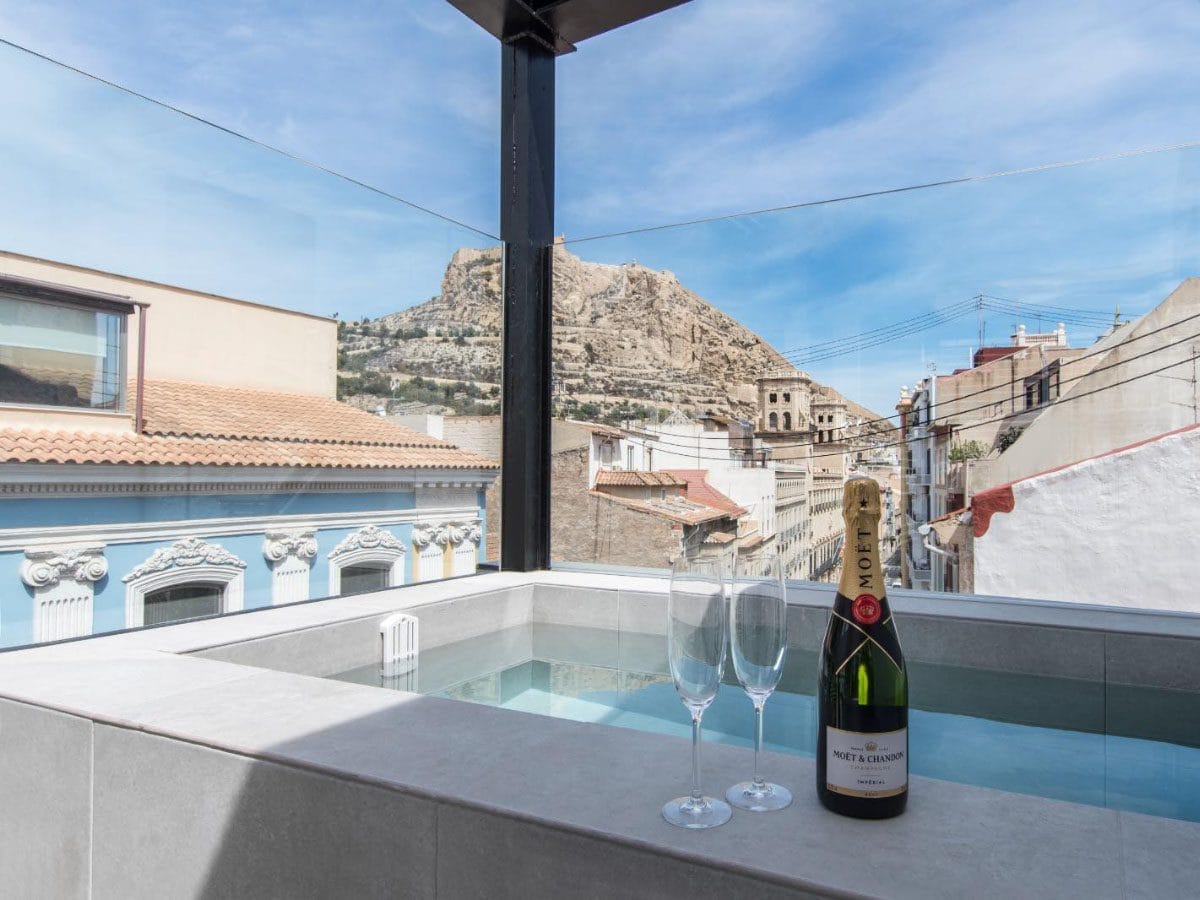
- Hotels: the selection is huge, ranging from large, luxury hotels on the harbor and beach to charming boutique hotels in the Old Town;
- Apartments: a popular choice for those who want to stay in the middle of city life or, on the contrary, choose to stay with a sea view in the San Juan neighborhood;
- Vacation homes and villas: although less central, you’ll find beautiful villas, often with private pools, in the surrounding neighborhoods and along the coastline toward Cabo de las Huertas.
Many accommodations in the center are within walking distance of the main attractions, restaurants and the Postiguet beach.


The gastronomy of Alicante
Alicante’s gastronomy offers a mix of traditional Spanish flavors and international influences. The quality of the dishes is guaranteed by the use of fresh produce from local markets.
Culinary venues
Where you eat largely determines the experience in Alicante:
-
Mercado Central: In this historic market hall you can buy fresh produce or eat local snacks directly from the bars;
-
Calle Castaños: this is the central spot for the afternoon tradition tardeo with many terraces and bars;
-
The port and promenade: here are many restaurants overlooking the Mediterranean Sea;
-
El Barrio Santa Cruz: The city’s old quarter is known for its many narrow streets lined with tapas bars and casual eateries.
Flavor profiles and specialties
Menus in Alicante feature a variety of local specialties:
-
Rice culture: the city specializes in rice dishes(Arroz) prepared with the local Salmorreta sauce;
-
Regional products: well-known specialties of the area are the Turrón from Jijona and the wines from the Vinalopó Valley;
-
Fresh fish: due to its coastal location, there is a wide range of fresh seafood and fish dishes;
-
Salmorreta sauce: a base of tomato, garlic and nora peppers that forms the basis of many local dishes.
Gastronomic peculiarities
There are several traditions and events that promote local food culture in the city:
-
Tardeo: a popular tradition where people gather on Saturday afternoons for drinks and snacks between lunch and dinner;
-
Gastronomic routes: there are regular events such as routes for specific rice dishes or tapas;
-
Local markets: events in and around the market halls put the focus on tasting new local products.
Restaurants in Alicante
Alicante offers a huge choice of bars and restaurants for any time of the day. You start the day with a fresh breakfast in the market hall or opt for a sumptuous lunch in the city center. In the evening, enjoy an atmospheric dinner at the harbor or the boulevard.
The quality is high due to the use of fresh products from local markets. You will always find a suitable place, from a tapas bar to an upscale restaurant overlooking the sea.
The facilities in Alicante
Supermarkets in Alicante
In the city, you will find an option for groceries on almost every street corner:
-
Mercadona: this is the market leader in the city with many branches, recognizable by its green color and focus on its own brand Hacendado;
-
El Corte Inglés: in the basement of this large department store is an upscale supermarket(Hipercor) with an extensive international department;
-
Carrefour: you will find large branches of this chain in the Gran Vía and Puerta de Alicante shopping centers;
-
Mercado Central: this is the large indoor fresh food market on Avenida de Alfonso X El Sabio where you can buy fresh fish, meat, vegetables and fruits from local merchants.
Dutch products
There are no large Dutch supermarkets located in the center of Alicante. However, you can still get Dutch products in the following ways:
-
International departments: supermarkets such as Carrefour and the Hipercor of El Corte Inglés often sell a small assortment of Dutch products such as peanut butter or cookies;
-
Lidl and Aldi: these stores regularly sell products that are also on the shelves in the Netherlands, such as certain cheeses or seasonal products.
Parking in Alicante
Downtown:
- Plaza del Puerto parking garage: this parking garage is near the harbor and Postiguet beach. It is an expensive option, but it is useful if you want to visit the center;
- Alfonso el Sabio parking garage: this parking garage is located in the center of the city, close to the Mercado Central and the Explanada de España. It is a less expensive option than Parking Plaza del Puerto, but it can still be busy;
- Canalejas parking garage: this parking garage is located near the Rambla de Méndez Núñez, one of the main shopping streets of Alicante. It is a good option if you want to shop or eat out.
Outside the center:
- Elche parking lot: this parking lot is located just outside the center of Alicante and is accessible by tram. It is a cheap option if you are going to stay in Alicante for a few days and do not plan to be in the center much;
- P+R Alicante parking lot: this parking lot is located just outside the center of Alicante and is accessible by bus. It is a cheap option if you want to visit the city and do not want to park in the center.
Tourist office in Alicante
Alicante is the largest city on the Costa Blanca. It therefore has several tourist offices:
- At Alicante airport;
- The information point near the port and the promenade;
- The information point at the train station of Alicante;
- The information point at San Juan beach;
- On the island Tabarca.
My view of Alicante
Metropolitan feel within walking distance
What still strikes me after all these years on the Costa Blanca is how uncluttered Alicante has remained. Although it is officially the largest city in the region, in practice it never feels massive or overwhelming.
The big advantage for me, then, is its compactness: the historic center, the marina and the expansive promenade are all a short walk from each other.
Personal tips:
- Park your car in the port(Interparking Plaza del Puerto)
- Visit The Ocean Race Museum in the harbor
- Go Italian food at DITALY in the city’s old quarter
All the tips for your visit to Alicante
Additional information about Alicante
Question & answer (FAQ)
Is Alicante leuk?
Ja, Alicante is een ontzettend leuke en veelzijdige stad die het beste van twee werelden combineert: een levendige Spaanse stad en een heerlijk zandstrand. Het is de ideale bestemming voor wie een stedentrip wil afwisselen met ontspanning aan zee.
Wat is het centrum van Alicante?
Het centrum van de historische binnenstad, oftewel "El Barrio", ligt rondom de Rambla de Méndez Núñez, de belangrijkste winkelstraat, en de Explanada de España, de sfeervolle boulevard langs de haven.
Kun je fietsen door Alicante?
Ja, je kunt zeker fietsen door Alicante. Het is zelfs een leuke manier om de stad te verkennen en de verschillende wijken te ontdekken. Alicante is redelijk vlak, vooral langs de kust, dus het is niet te inspannend om te fietsen. Er zijn fietspaden langs het strand en door de stad. Tip: boek een fietstour of huur een fiets.
Waar staat Alicante bekend om?
Alicante staat bekend om het Castillo de Santa Bárbara. Dit kasteel torent hoog boven de stad uit op de Monte Benacantil en is echt een must-see als je Alicante bezoekt. Vanaf de top van het kasteel heb je een adembenemend uitzicht over de stad, de haven, en de Middellandse Zee. Je kunt er door de eeuwenoude gangen en zalen dwalen, de geschiedenis van het kasteel ontdekken en genieten van de bijzondere sfeer.
Is Alicante een veilige stad?
Ja, Alicante wordt over het algemeen als een zeer veilige stad beschouwd voor toeristen. Zoals in elke grote stad is het slim om op drukke plekken zoals de Explanada op je spullen te letten, maar de sfeer is ontspannen en vriendelijk.
Kun je in Alicante kraanwater drinken?
Ja, het kraanwater in Alicante is veilig om te drinken, al heeft het een vrij sterke chloorsmaak. Veel inwoners en toeristen geven daarom de voorkeur aan flessen water of gefilterd water voor de smaak.
Is Alicante geschikt voor een vakantie met kinderen?
Ja, Alicante is geschikt voor een vakantie met kinderen, de stad is erg kindvriendelijk door de brede, autovrije boulevard (Explanada) en het strand van Postiguet dat direct aan de stad grenst. Veel parken hebben moderne speeltuinen en het kasteel is een groot avontuur, waarbij je de lift kunt nemen als de klim met een kinderwagen te zwaar is.
In hoeveel dagen kun je heel Alicante bekijken?
Je hebt gemiddeld 2 tot 3 dagen nodig om de belangrijkste bezienswaardigheden van Alicante op een ontspannen tempo te ontdekken. In deze tijd kun je bijvoorbeeld het kasteel bezoeken, wandelen door de oude stad, de musea verkennen en een dagtrip maken naar het eiland Tabarca.
Wat is de beste wijk om te overnachten?
Voor de echte sfeer kies je de Casco Antiguo (oude stad), waar je tussen de monumenten en restaurants zit. Wil je rust en strand, kijk dan naar de wijk rondom Playa de San Juan, en voor wie van winkelen houdt is de omgeving van de Avenida Maisonnave de beste plek.
Hoe verplaats je je het beste in Alicante?
Je verplaatst je in Alicante het beste te voet of met de moderne TRAM (tram-trein), aangezien de belangrijkste bezienswaardigheden in het centrum op loopafstand van elkaar liggen. Voor langere afstanden is de TRAM de ideale oplossing; Lijn 1 en 3 brengen je voor slechts een paar euro langs de kust naar Playa de San Juan of zelfs helemaal naar Benidorm en Dénia.
Handy links
- Alicante Turismo (Tourist information)
- Alicante Wikipedia (General information)
- Spain.info Alicante (Tourist information)
Download the free Pure Costa Blanca app
All information about Alicante at hand
Do you want to be sure that you don’t miss anything from your favorite place on the Costa Blanca? Then download the free app and turn your phone into the ultimate travel guide for the entire region:
- All “website” content is available: all travel guides, blogs and other tips for restaurants, activities and Things to do, as well as accommodations;
- Easy navigation: all available information is presented clearly (by location) and you can easily navigate back and forth;
- Interactive map: explore the Costa Blanca and easily plan your routes to the most beautiful places;
- Smart place recognition: when you approach a place on the Costa Blanca, you automatically receive a notification that allows you to immediately open the travel guide for that place;
- Your favorites: you can save and easily find your favorite locations, such as restaurants.
The Pure Costa Blanca app is completely free to download and use. Start planning your perfect trip today!


Publication date:
7 May 2023
Updated on:
28 April 2026
Page updated on: 28 April 2026
Comments on this page:

Your signpost on the Costa Blanca
Hi! My name is Rick, initiator of CostaBlanca.nl and the free App. Since 2015 I can be found on the Costa Blanca on a monthly basis.
With this online platform I make as much as possible relevant information and tips about places on the Costa Blanca insightful and clear. The texts are exclusively written by myself. The photos and videos are made by me.
Learn more about collaborative opportunities.