


The palm garden of Elche – UNESCO World Heritage Site
The Palm Garden of Elche, officially known as the Palmeral de Elche, is a unique cultural landscape in the province of Alicante.
With a population of over 200,000 date palms, this is the largest palm grove on our continent. Since the year 2000, this special place has been on UNESCO‘s World Heritage List. It is much more than a collection of trees; it is an ancient agricultural system that still functions.
In this article you will read about its Moorish origins, the world-famous Imperial Palm and the artisanal tradition of white palms.


Author: Rick, more than 10 years active on the Costa Blanca. These texts are written from my own experiences and based on current sources.
Page updated on: 24 April 2026
Table of contents
ToggleA technical masterpiece from Moorish times
Although the first palms were probably planted by the Carthaginians as early as the 5th century BC, the garden took its present form under Arab rule. Between the 7th and 10th centuries, the Moors developed an ingenious system to make the dry land fertile.
This system is based on an oasis structure:
-
Irrigation canals: a network of channels transports water from the Vinalopó River to the various plots;
-
Huertos: palms stand in rectangular gardens that form a grid pattern from above;
-
Layered agriculture: the shade of the palms creates a microclimate in which pomegranates and vegetables can grow;
-
Protection: the trees act as a natural barrier against wind and excessive evaporation of water.
Even after the reconquest by the Christians, irrigation techniques and laws protecting the palms remained virtually unchanged.

The legendary Palmera Imperial
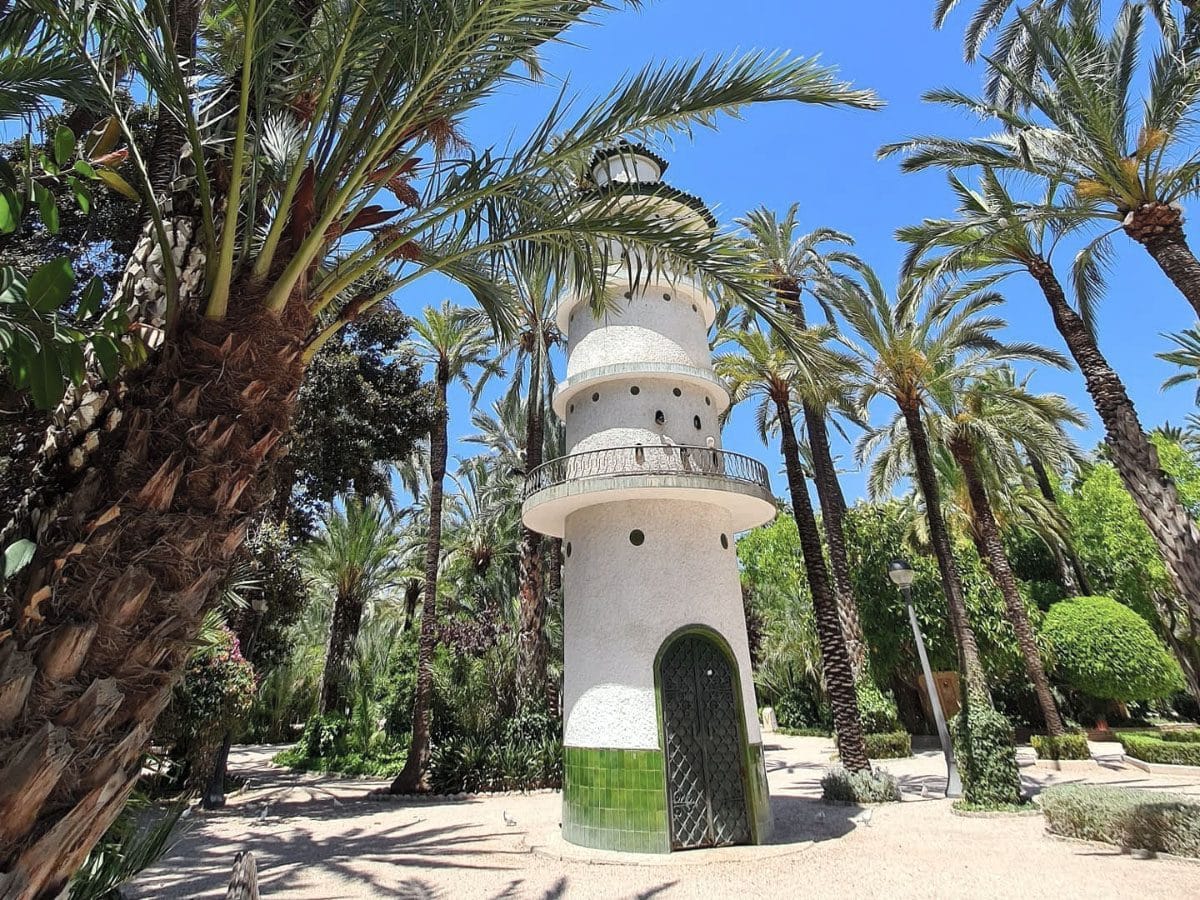
Within the Palmeral is the Huerto del Cura. This is a private garden known for its botanical beauty and rare plant species. The absolute highlight of this garden is the Palmera Imperial(Imperial Palm).
This tree is world famous for its unusual shape:
-
Structure: from the central trunk grow 7 additional arms, making the tree look like a candlestick;
-
Age: the palm is estimated to be over 175 years old;
-
History: the name is a tribute to Austrian Empress Sissi, who admired the tree in 1894.
In addition to this iconic palm, the Huerto del Cura also features soothing ponds, peacocks and an extensive collection of cacti.
Tradition of white palms
Elche is the only place in the world where the artisanal tradition of the white palm is still widely practiced. This process is closely linked to the city’s religious identity.
The process works as follows:
-
Shielding: the young leaves are tied together and covered so that they do not receive sunlight and turn white;
-
Wickerwork: artisans process the supple leaves into complex figures and decorations;
-
Palm Sunday: the braided branches are exported worldwide for use during processions on Palm Sunday.
At the Museo del Palmeral you can see live demonstrations of this braiding technique and learn more about the history of the craft.
The battle against the red palm weevil
Despite its UNESCO protected status, the palm garden is threatened by a dangerous enemy: the red palm beetle(Rhynchophorus ferrugineus). This insect has posed a serious risk to the survival of date palms since the beginning of the 21st century.
The measures to save the garden are severe:
-
Biological control: experts use natural enemies and fungi to control the beetle population;
-
Strict legislation: there is a ban on changes that could affect the Palmeral ‘s structure;
-
Ongoing monitoring: every tree in the public area is checked regularly for signs of infection;
-
Replanting: in municipal nurseries, over 50,000 young palms are ready to replace diseased ones.
Thanks to this intensive care, Elche’s distinctive cityscape will be preserved for future generations.
Walking through green parks
You can experience the palm garden in several ways. One popular option is the Route of the Palmeral, a walking route of about 5 kilometers that takes you along the most beautiful public plots.
Some locations along the route are:
-
Parque Municipal: a large city park with fountains, pavilions and an open-air theater;
-
Huerto del Chocolatero: a historic plot that shows well the transition from agricultural use to urban park;
-
Paseo de la Estación: a wide promenade ideal as a starting point for your exploration.
The trails are flat and mostly shaded, making the hike enjoyable even in the summer months.
Practical information
Below are the details for visiting Elche’s palm garden.
Location:
The various plots are scattered throughout the city. The Parque Municipal often serves as the central point.
Address: Paseo de la Estación s/n, 03202 Elche (Alicante).
Opening hours:
| Period | Days | Times |
|---|---|---|
| Winter | Daily | 7:00 a.m. – 9:00 p.m. |
| Summer | Daily | 7:00 a.m. – 11:00 p.m. |
Note! The Huerto del Cura is a private garden with shorter opening hours and an entrance fee of about €5.00.
Palm Garden of Elche on the map
Veration:
- Train: the train service(Cercanías) between Alicante and Murcia stops at Elche Parque station, within walking distance of the garden;
- Car: parking is available in the surrounding parking garages or in the RV lot near the park.
Question & answer (FAQ)
Is de toegang tot de palmentuin gratis?
Ja, de meeste openbare parken en de wandelroute zijn gratis toegankelijk. Voor de Huerto del Cura en de musea moet je een kaartje kopen.
Mag de hond mee naar binnen?
Ja, honden zijn welkom in de openbare parken, mits zij aan de leiband blijven.
Wanneer worden de dadels geoogst?
De oogst van de dadelpalmen vindt plaats in het najaar, meestal rond november en december.
Zijn er ook andere bezienswaardigheden in de buurt?
Jazeker, op loopafstand vind je de Basilica de Santa María en het Archeologisch Museum (MAHE).
More tips for your visit to Elche
Relevant articles
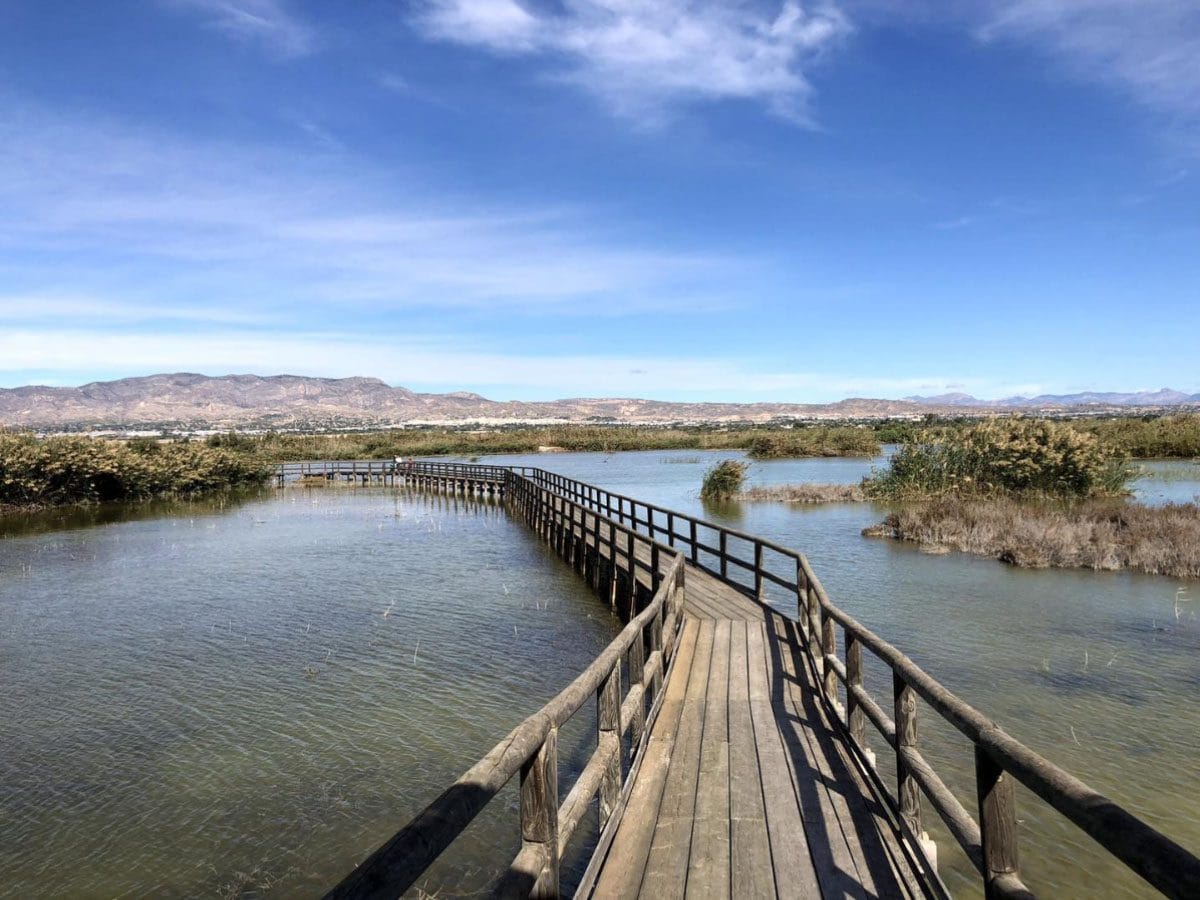
Hiking & bird watching in El Hondo? Find trails (wooden walkway), info on rare birds & practical tips for this unique park.
Updated on:
24 April 2026
Page updated on: 24 April 2026
Comments on this article:

Your signpost on the Costa Blanca
Hi! My name is Rick, initiator of Pure Costa Blanca and the free App. Since 2015 I can be found on the Costa Blanca on a monthly basis.
With this online platform I make as much as possible relevant information and tips about places on the Costa Blanca insightful and clear. The texts are exclusively written by myself. The photos and videos are made by me.
Learn more about collaborative opportunities.