
All about El Castell de Guadalest, general & practical information
El Castell de Guadalest (in both Spanish and Valencian) (until 2002 Guadalest) is a village in the province of Alicante, located in the Valencian Community in Spain on the Costa Blanca.
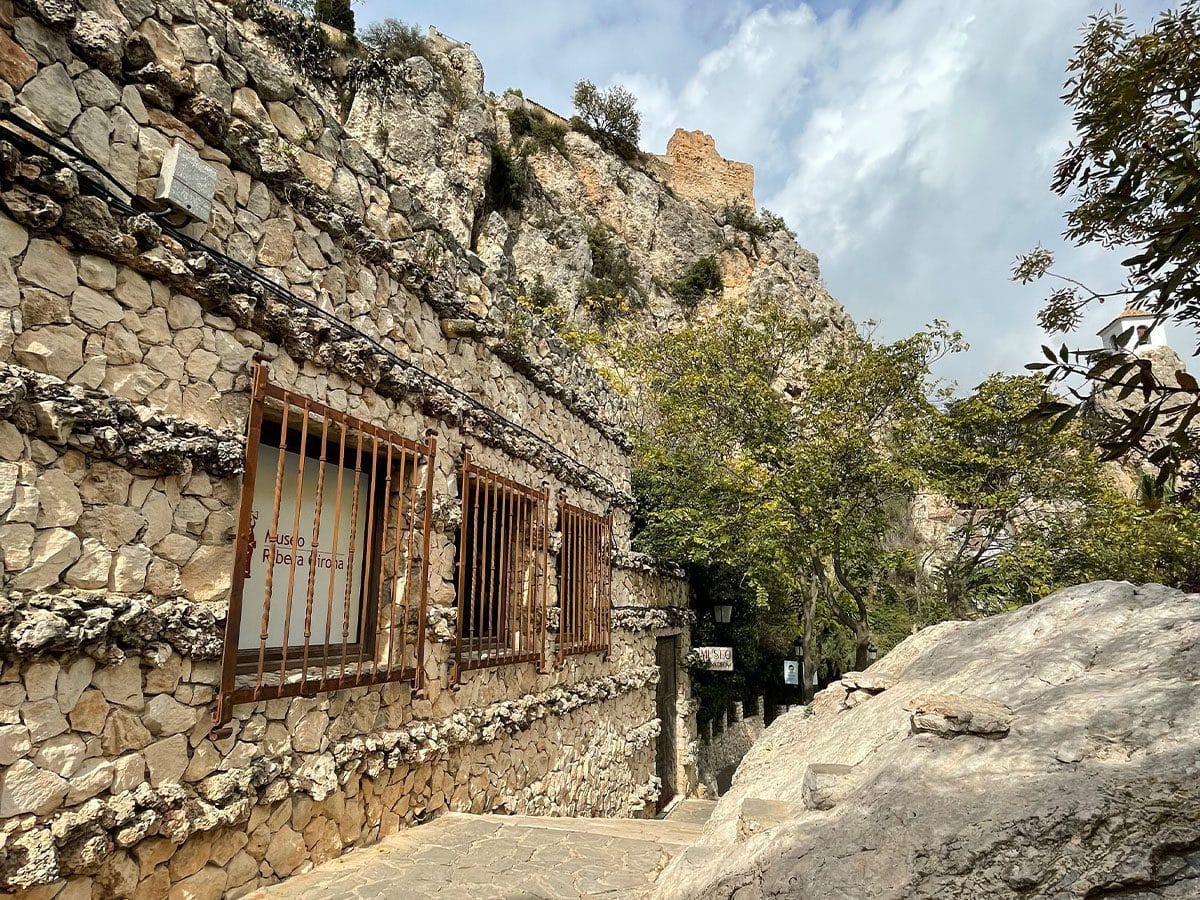
It is one of the most picturesque villages in the region. The village of Guadalest is remarkable for its beautiful location, built on a steep rock formation overlooking a reservoir. This place is a tourist attraction because of its unique architecture, breathtaking landscapes and cultural attractions.
👥 200 residents
📐 area 16km²
📍 61km from Alicante
Joan Gadea Pons (Mayor of Guadalest): “El Castell de Guadalest is Tourism with capital letters. Our presence in the association of the most beautiful villages is a plus for our visibility, but it also reminds us that we must continue to open up our heritage to the whole world.”
Brief summary
All essential information about Guadalest: facts & figures, history, location, neighborhoods, weather, gastronomy, all facilities and practical tips for your stay.
Page layout:
- Introduction & history
- Geography & neighborhoods
- Climate & nature
- Transportation & lodging
- Gastronomy
- Facilities

Author: Rick, more than 10 years active on the Costa Blanca. These texts are written from my own experiences and based on current sources.
Page updated on: 28 April 2026
Table of contents
ToggleGetting to know Guadalest and its history
Did you know that…
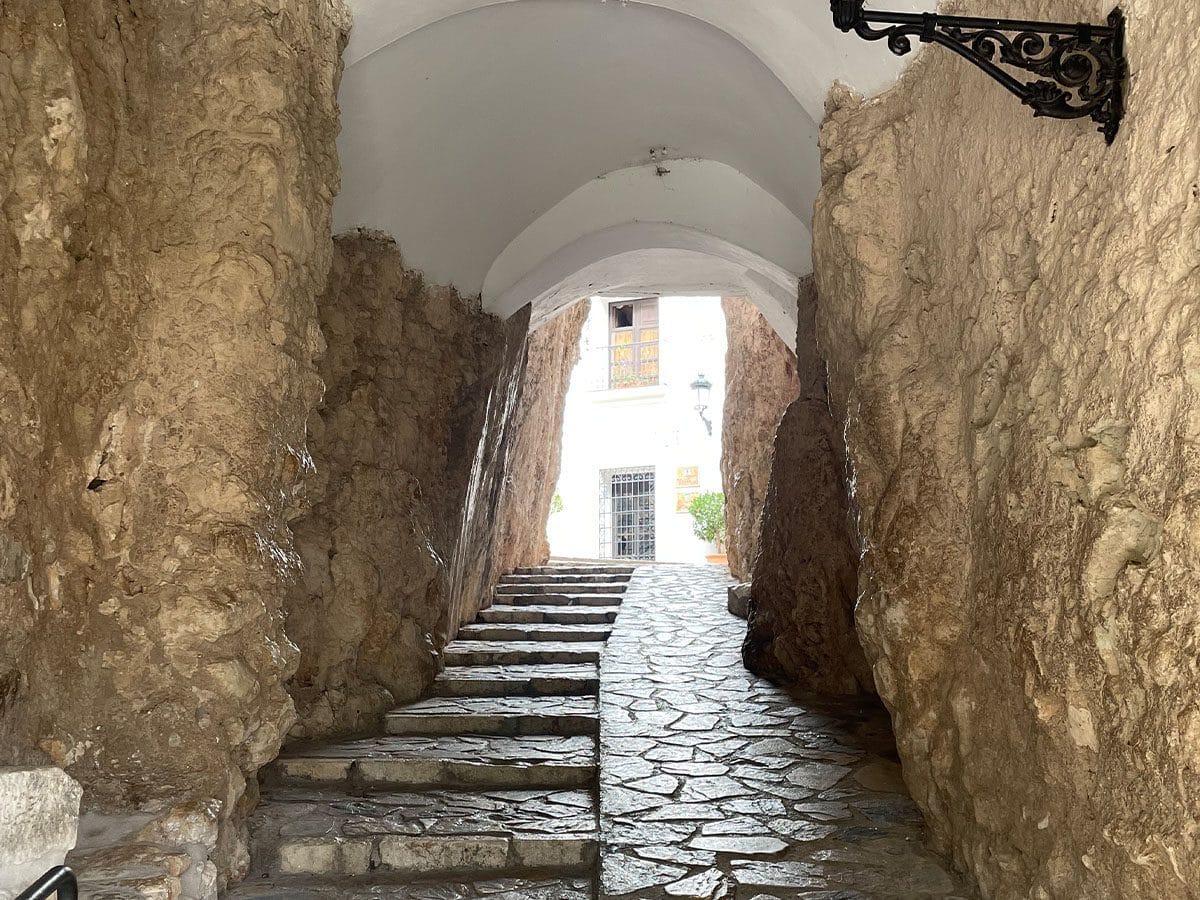
- Guadalest used to be accessible only through a tunnel through the rocks? This tunnel, carved into the mountainside, was the only access to the village and served as a defense;
- the castle of Guadalest was largely destroyed by an earthquake in 1644? You can still visit the remains of the castle;
- Guadalest was once an important strategic site? Its location high in the mountains made the village difficult to conquer;
- there are more than 20,000 different salt and pepper shakers on display in Guadalest at the Museo de Saleros y Pimenteros;
- Guadalest officially ranks among the“Most Beautiful Villages in Spain.”
The history in brief
- Early History (11th century): Guadalest’s location atop a steep rock defined its history. Although the area was already inhabited in prehistoric times, the Moors gave the village its shape by building the strategically located castle in the 11th century;
- Christian Reconquest (13th century): Around 1245, Guadalest was recaptured by James I of Aragon, after which it became a crucial stronghold in the Kingdom of Valencia. It was ruled for centuries by influential noble families, including the Orduñas;
- Disasters and Formation (17th and 18th centuries): severe earthquakes in the 17th and 18th centuries destroyed part of the original fort, giving the village its current and unique appearance of a ruin on the cliff;
- Present: today its rich historical heritage makes it one of the most visited historical villages in Spain.
The name “El Castell de Guadalest
The name ‘Guadalest’ has Arabic origins and perfectly describes the geography of the location. The first part, ‘Guada-‘, is derived from the Arabic word wadi, meaning ‘valley’ or ‘river’. The second part, “-lest,” is most likely a corruption of a word meaning “castle” or “fortress.
Therefore, the most likely meaning of the name is “Valley of the Castle,” a direct reference to the fortified castle that dominates the valley and the river.
Until 2002, the place was officially called simply Guadalest. But to emphasize the important role of the castle in the history and identity of the village, the name was officially changed to El Castell de Guadalest.
The economy & tourism in Guadalest
Local employment
Although Guadalest has a very small population, local employment rests on an intensive tourist economy that handles thousands of visitors daily. Employment is dominated by retail and hospitality, but is unique because of the huge concentration of museums.
In addition, the village acts as a catalyst for employment in the surrounding valley(Vall de Guadalest). Many residents from neighboring villages such as Benimantell and Beniardá find work in Guadalest’s logistics chain, from the supply of handicrafts to the maintenance of its historic monuments. Stability is further ensured by the valley’s agriculture – particularly the cultivation of nisperos and almonds – which is closely intertwined with the local gastronomic sector.
The development of the tourism industry
Guadalest’s policy focuses on balancing mass day tourism with maintaining livability for its few residents. Joan Gadea Pons, mayor of Guadalest, highlights the village’s course for 2026:
“If we want to be the best tourist village, the municipality must also ensure that it is the best place to live. Finding that balance is not easy, but it succeeds thanks to the commitment of our own people.”
The focus is currently on digitizing heritage and spreading visitor pressure through the label Smart Tourist Destination. Significant investments are being made in projects such as the museumization of the Castillo de la Alcozaiba and innovative actions such as the Night of Museums, in order to encourage evening tourism as well.
In addition, the municipality is actively promoting nature tourism around the reservoir and surrounding mountain ranges. This strategy should ensure that Guadalest does not remain just a daytime museum village, but transforms into a quality destination with more depth.
Geography & neighborhoods in Guadalest
The location of Guadalest
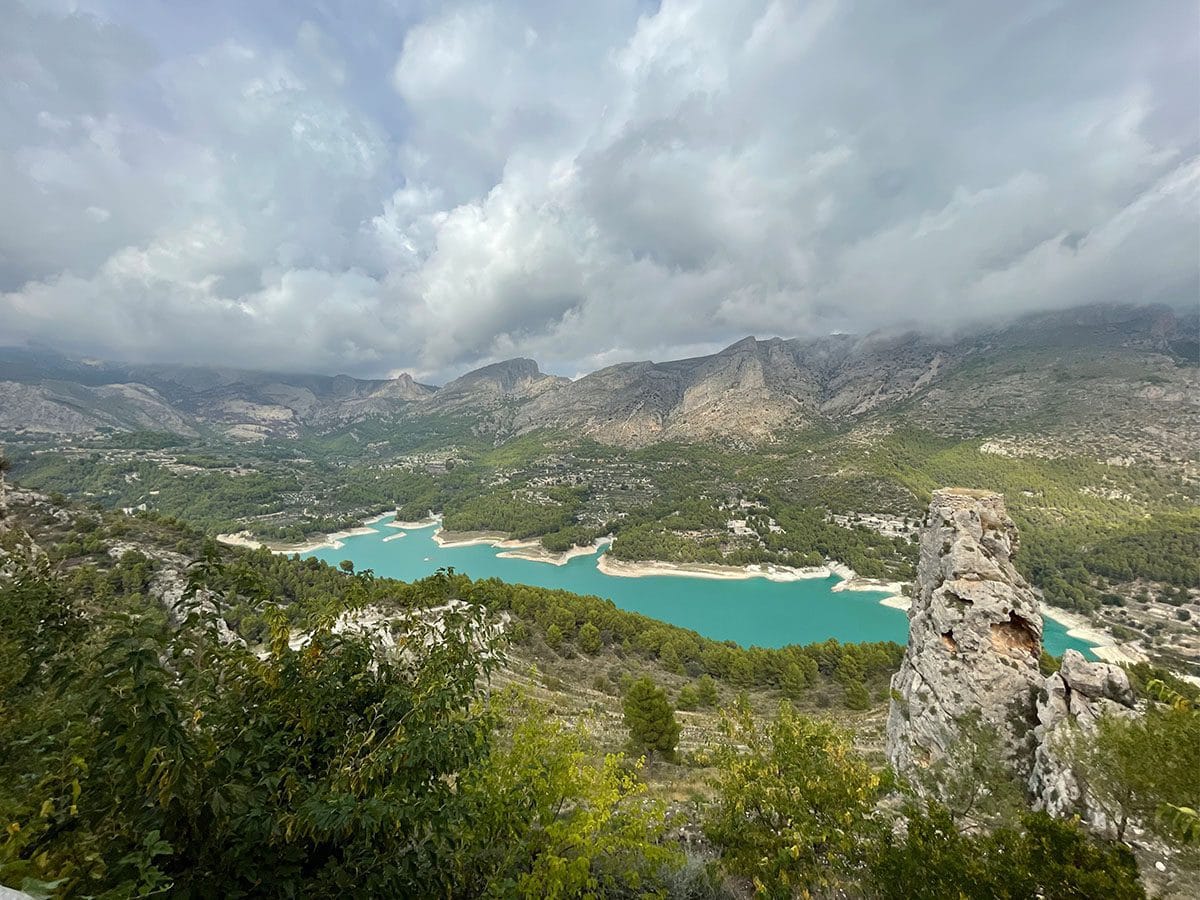
Guadalest is located in a valley and surrounded by the mountain ranges of Sierra d’Aitana, Sierra de Serrella and Sierra de Xortà. The surroundings are characterized by steep cliffs and a deep blue reservoir at the foot of the village.
Its high elevation and preservation of medieval architecture make it one of the most visited places in the region.

The accessibility of Guadalest
Because of its inland location, the road to the village is winding, but the roads are well maintained and offer sweeping views of the valley.
From the coastal towns of Altea or Benidorm, travel time is about 25 to 30 minutes by car via CV-70 or CV-755.
Within the region, Guadalest is also accessible by scheduled bus from Benidorm, although the frequency is limited. You can park in the large central parking lot at the foot of the historic center to explore the rest of the village on foot.
Map Guadalest Spain
The neighborhoods in Guadalest
Guadalest is a small mountain village and has no neighborhoods like a big city has. The village is physically divided into two distinct parts separated by its unique location:
The historic core and the modern part
The layout of the village is determined by the natural rock formations:
-
El Castell de Guadalest: this is the historic, car-free part that sits atop the rocks and is only accessible through a tunnel carved into the rocks;
-
El Arrabal: this is the lower part of the village where you will find most of the stores, restaurants and museums;
-
Accessibility: you can easily reach the lower part on foot from the parking lots, while the upper part requires a walk uphill;
-
Buildings: the historic part consists of ancient monuments such as the San Jose Castle, while the buildings around the parking lots are more modern for visitors.
The climate & nature in Guadalest
A Mediterranean climate
The weather in El Castell de Guadalest is generally Mediterranean, with warm, dry summers and mild, wet winters.
Guadalest is located in a mountainous area, so the weather can vary depending on the altitude. In the higher parts of the village, it can be cold in the winter, and snow can even fall. Wind can also be a factor, especially in winter, when winds can come from the north and bring cold temperatures.
The weather, the average temperature
Below is a table that lists by month the average temperatures in El Castell de Guadalest:
| Month | Avg. daytime temperature (°C) | Avg. temperature at night (°C) | Avg. number of rainy days |
|---|---|---|---|
| January | 12 | 8 | 5 |
| February | 13 | 9 | 4 |
| March | 15 | 10 | 4 |
| April | 17 | 12 | 3 |
| May | 20 | 15 | 2 |
| June | 24 | 19 | 1 |
| July | 27 | 22 | 0 |
| August | 27 | 22 | 1 |
| September | 24 | 19 | 2 |
| October | 19 | 14 | 4 |
| November | 15 | 11 | 5 |
| December | 16 | 8 | 5 |
Nature around Guadalest
The surroundings of Guadalest are shaped by impressive mountain scenery and bordered by several protected coastal and mountain areas:
- Sierra Helada Natural Park (Serra Gelada): this is one of the closest official natural parks to the coast (near Altea/Benidorm). This park is known for its towering cliffs and the popular hiking trail to the lighthouse in Albir(Faro del Albir);
- Peñón de Ifach Natural Park : (approx. 45-55 min drive) this 332-meter-high rock near Calpe offers a challenging climb through a tunnel, which is rewarded with unforgettable 360° views of the coast;
- Guadalest Reservoir: Located directly below the village, this famous reservoir is notable for its distinctive turquoise blue waters. Sandwiched between the mountains, the sleek surface of the water creates an oasis of tranquility and offers beautiful views;
- Fonts de l’Algar: a short drive from Guadalest lies this beautiful natural area (the waterfalls of Algar). The area consists of a series of waterfalls, rapids and natural “pools” where one can hike and take a refreshing dip in the summer;
- The surrounding mountain landscape: the village is sandwiched between the large mountain ranges of Sierra d’Aixorta, Sierra de Serella and Sierra de Aitana. These are areas very available to hikers.
Transportation & your stay in Guadalest
Guadalest is not a typical vacation destination to spend a week, but it is the most popular day trip for tourists on the Costa Blanca.
Accessibility: how to get to Guadalest?
The nearest airport is Alicante-Elche (ALC), about an hour away. However, most visitors come from the nearby coastal towns.
- By (rental) car: this is the most flexible option. From Benidorm, Altea or Calpe you can drive to Guadalest in 30 to 45 minutes via beautiful mountain roads (such as the CV-70 and CV-755). The route itself is already an experience;
- With an organized excursion: almost every tour operator on the Costa Blanca offers bus tours to Guadalest, often in combination with a visit to the Fonts de l’Algar. This is an easy and popular choice;
- By public transport: Buses run from Benidorm, for example, but are less frequent. This requires a bit more planning, but is an economical option.
For whom is a day trip to Guadalest recommended?
Guadalest is surprisingly diverse and attracts a wide audience. It is a perfect getaway for:
- Lovers of culture and history: With the medieval castle, the old dungeon, Casa Orduña and the many small museums, there is plenty for culture lovers to discover;
- Nature lovers and hikers: The views of the surrounding mountains(Sierra d’Aixorta and Aitana) and the turquoise reservoir are breathtaking. The valley is an excellent hiking area;
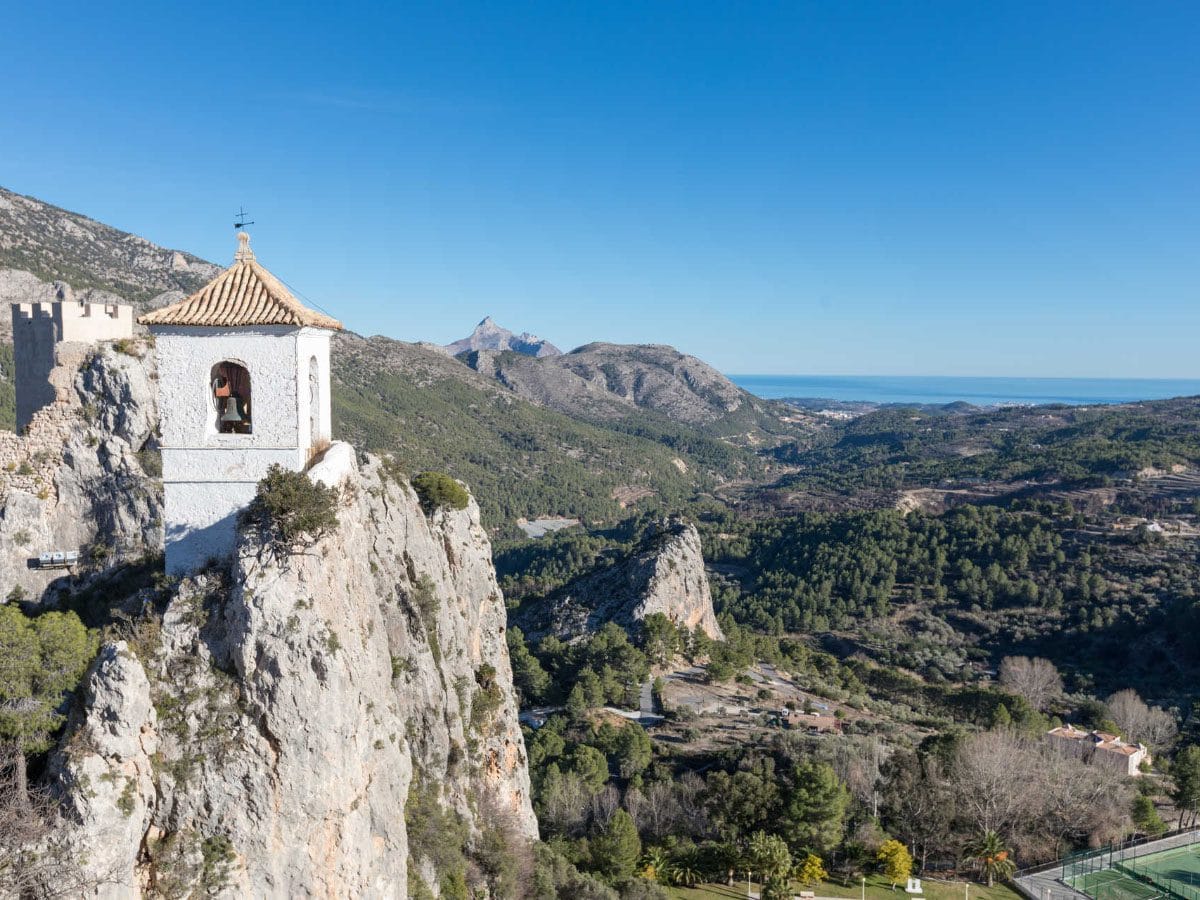
- Photographers and epicureans: Guadalest is extremely photogenic. The village itself, the bell tower and the spectacular views are guaranteed to produce beautiful pictures.
Lodging near Guadalest
Although most people stay on the coast, there are unique options for those seeking the tranquility of the mountains.
- Casas Rurales and boutique hotels: in the valley around Guadalest you will find several charming casas rurales (rural houses) and small-scale hotels. This is ideal for peace seekers, hikers and cyclists who want to avoid the hustle and bustle of the coast;
The gastronomy of Guadalest
Restaurants in Guadalest
The village may be small, but it has a surprisingly diverse range of restaurants. For a delicious lunch or dinner you can visit several restaurants with local specialties. There are also several tapas bars where you can enjoy small snacks and a good glass of Spanish wine.
The facilities in Guadalest
Stores and local products in Guadalest
In Guadalest you won’t find a large weekly market or supermarket like in many other towns on the Costa Blanca. Instead, the narrow, atmospheric streets offer a surprising array of small, authentic stores. Here you will find many different local and artisanal products.
Think specialties such as locally produced honey, olive oil and wine, as well as handmade souvenirs, art, clothing and original gifts. Many of these stores are family-run businesses where you are proudly served, making shopping a unique and personal experience.
Parking in Guadalest
Parking in Guadalest is fortunately easy. On the outskirts of the village you will find several large parking lots. Just follow the Parking signs as you approach Guadalest.
A day pass costs only a few euros, and then you can leave your car there all day. From the parking lot you can walk to the center in a few minutes. It’s a bit of a climb, but it’s definitely worth it!
Tip: Guadalest is a popular destination, so it can be crowded in high season. Come early in the morning or later in the afternoon to avoid the crowds and easily find a parking spot.
Tourist office in Guadalest
The tourist office in Guadalest can be found down by the parking lot in Guadalest (and not, as the photo in Google Maps suggests, in the square upstairs by the viewpoint).
- Google Maps location
- Telephone number: +34 965 885 298
- Website: guadalest.es
- Opening hours:
- Monday through Friday: 9:00 a.m. – 3:00 p.m;
- Saturday: closed;
- Sunday: 10:00 am – 2:00 pm.
All the tips for your visit to Guadalest
Additional information about Guadalest
Question & answer (FAQ)
Waar ligt El Castell de Guadalest?
El Castell de Guadalest, een klein dorpje in de provincie Alicante, ligt ongeveer 25 kilometer landinwaarts van de Costa Blanca, in een prachtige vallei omringd door bergen. Bekende plaatsen in de buurt zijn Callosa d'en Sarrià met nabij de watervallen van Algar. Richting de kust vind je de plaatsen Altea en Albir. El Castell de Guadalest is dus de perfecte bestemming voor een dagtrip om de kust te combineren met de rust en schoonheid van het binnenland.
Wat is het centrum van Guadalest?
Plaza del Ayuntamiento is het centrum van El Castell de Guadalest. Hier vind je het gemeentehuis, diverse winkeltjes en gezellige terrasjes. De grote toegangspoort tot het kasteel is vanaf dit plein goed te zien. Vanaf de Plaza del Ayuntamiento heb je een mooi uitzicht over de vallei. Het is een levendige plek waar je de lokale bevolking kunt ontmoeten en de sfeer van Guadalest kunt proeven.
Wat is Castell de Guadalest?
Het Castell de Guadalest is een middeleeuws kasteel bovenop een rots, met een rijke geschiedenis. Hoewel het door een aardbeving en oorlog beschadigd is, zijn de overblijfselen van de muren, torens en de kerker nog steeds indrukwekkend. Vanaf de kasteelmuur heb je een prachtig uitzicht over de vallei en het stuwmeer.
Wat kost toegang tot El Castell de Guadalest?
El Castell de Guadalest zelf (als plaats) is gratis te bezoeken. Je kunt door de straatjes wandelen en genieten van de uitzichten zonder entree te betalen. Maar er zijn wel een aantal bezienswaardigheden waarvoor je een kaartje moet kopen, zoals het kasteel en de musea. De toegangsprijs voor het kasteel is €4,-. Voor een combiticket met enkele musea betaal je rond de €7,-.
Mag je zwemmen in het stuwmeer van Guadalest?
Nee, je mag niet zwemmen in het stuwmeer van Guadalest. Hoewel het helderblauwe water van het stuwmeer van Guadalest er aantrekkelijk uitziet, is zwemmen er helaas verboden vanwege de diepte, de wisselende waterkwaliteit en het belang als drinkwaterbron. Gelukkig kun je vlakbij wel zwemmen in de Fonts de l'Algar, prachtige watervallen met natuurlijke poelen.
Handy links
- Visit El Castell de Guadalest (Tourist information)
- El Castell de Guadalest Wikipedia (General information)
- Spain.info El Castell de Guadalest (Tourist information)
Download the free Pure Costa Blanca app
All information about Guadalest at hand
Do you want to be sure that you don’t miss anything from your favorite place on the Costa Blanca? Then download the free app and turn your phone into the ultimate travel guide for the entire region:
- All “website” content is available: all travel guides, blogs and other tips for restaurants, activities and Things to do, as well as accommodations;
- Easy navigation: all available information is presented clearly (by location) and you can easily navigate back and forth;
- Interactive map: explore the Costa Blanca and easily plan your routes to the most beautiful places;
- Smart place recognition: when you approach a place on the Costa Blanca, you automatically receive a notification that allows you to immediately open the travel guide for that place;
- Your favorites: you can save and easily find your favorite locations, such as restaurants.
The Pure Costa Blanca app is completely free to download and use. Start planning your perfect trip today!


Publication date:
22 July 2023
Updated on:
28 April 2026
Page updated on: 28 April 2026
Comments on this page:

Your signpost on the Costa Blanca
Hi! My name is Rick, initiator of CostaBlanca.nl and the free App. Since 2015 I can be found on the Costa Blanca on a monthly basis.
With this online platform I make as much as possible relevant information and tips about places on the Costa Blanca insightful and clear. The texts are exclusively written by myself. The photos and videos are made by me.
Learn more about collaborative opportunities.